

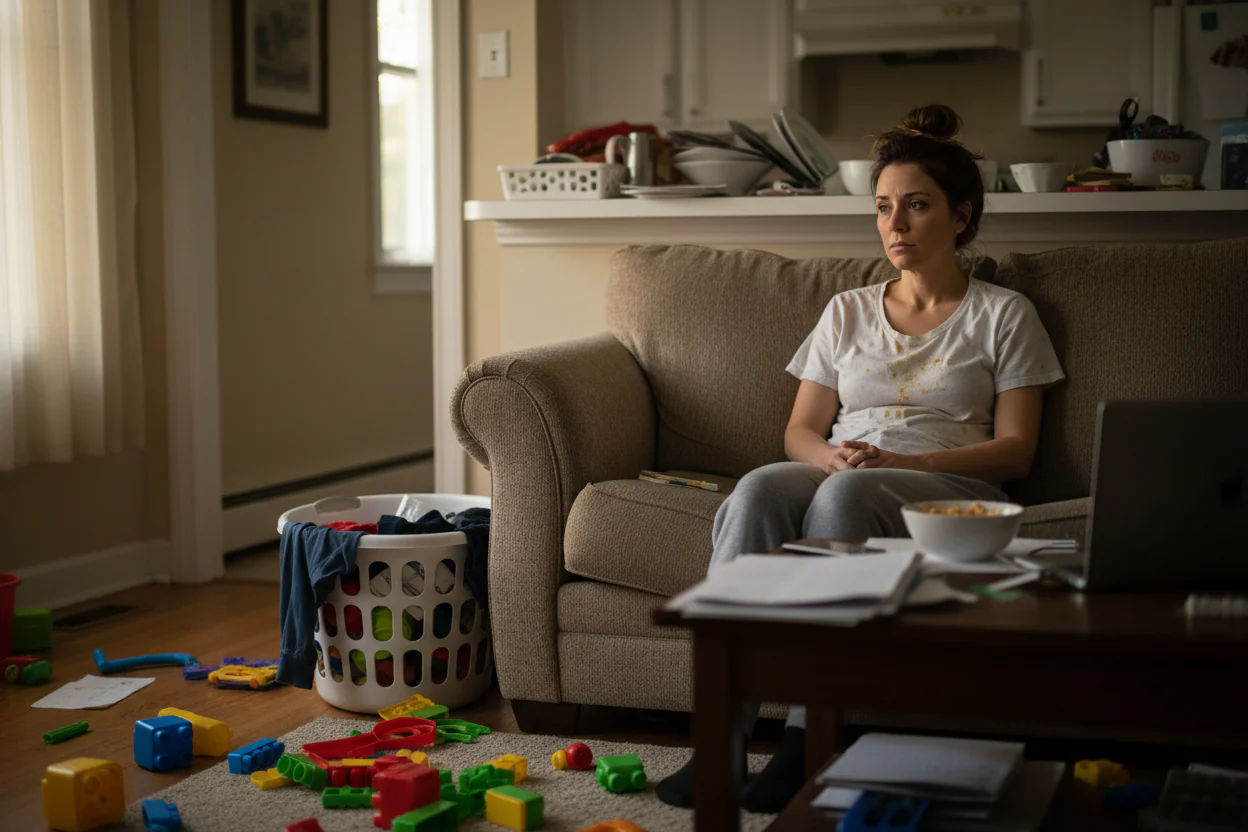
Motherhood is beautiful—but it can also feel relentless. When you’re raising young children, the mental load, physical demands, and constant decision-making can quietly build into something heavier: mom burnout.
I recently realized—between working around my husband’s demanding schedule—that I only have about two hours to myself each weekday. That moment stopped me in my tracks. I thought, something has to change. If you’ve had a similar realization, you’re not alone.
If you’ve ever felt overstimulated, exhausted, or like you’re running on empty, you’re not alone. The good news? There are realistic, doable ways to reduce stress and feel more like yourself again.
Here’s how to recognize burnout—and what you can actually do about it.
What Is Mom Burnout?
Mom burnout is a state of chronic physical and emotional exhaustion caused by prolonged stress. It can show up as:
- Feeling constantly tired (even after sleep)
- Irritability or short patience
- Loss of joy in things you used to enjoy
- Mental fog or forgetfulness
- Feeling overwhelmed by simple tasks
It’s not a failure—it’s a signal that something needs to shift.
1. Learn to Say No (Protect Your Time Like It Matters—Because It Does)
One of the biggest contributors to burnout is overcommitment.
If your calendar looks like it’s been squeezed with too many obligations, it’s time to rethink. As someone recently put it: “No ketchup on your calendar.” In other words—scheduling time to catch up with people is great, but it also takes away from your most valuable asset: your time.
Try this:
- Say no to non-essential events, playdates, or volunteer roles
- Limit activities to what aligns with your priorities
- Build in buffer time—white space is not wasted space
Your time is your most valuable resource. Spend it intentionally, not reactively.
2. Put Down the Phone
Your phone isn’t just a distraction—it’s a constant interruption.
Every notification pulls your attention away, making your brain work harder to refocus. Over time, this contributes to mental fatigue.
Simple shifts:
- Keep your phone in another room during playtime or meals
- Turn off non-essential notifications
- Create “phone-free” windows during the day
Being present isn’t about perfection—it’s about reducing noise. Not every text message you receive deserves your urgent attention.
3. Focus on One Task at a Time (Multitasking Is a Myth)
Trying to do everything at once is one of the fastest paths to burnout.
When you’re juggling kids, chores, texts, and work, your brain never fully completes a task—leaving you feeling scattered.
Instead:
- Pick one task → finish it → move on
- Use simple time blocks (even 10–15 minutes)
- Let go of the pressure to “do it all at once”
Completion creates momentum—and reduces overwhelm.
4. De-Clutter Your Space (Clear Space, Clear Mind)
Your environment directly impacts your mental load.
Clutter creates visual noise, constant reminders of unfinished tasks, and a low-level sense of stress that builds throughout the day.
Simplifying your space can feel like exhaling.
Start here:
- Tidy one small area at a time (a counter, a basket, a drawer)
- Reduce excess toys, clothes, and daily-use items
- Create simple systems that are easy to maintain—not perfect
Order doesn’t mean perfection—it means creating a space that supports you instead of overwhelms you. Personally, I always spend the extra hour at the end of each day getting everything back in order to prepare for the next day. I always appreciate the extra time spent when I can start fresh the next day.
5. Lower the Bar (Yes, Really)
Burnout often comes from unrealistic expectations—many of them self-imposed whether on ourselves or our kids.
Not everything needs to be perfect. And trust me, as a mom of two young kids with one on the way, I remind myself of this every day. It is the season of life where clothes are constantly stained, floors are messy, and the walls are covered in handprints. It won’t always be like this.
Give yourself permission to:
- Serve simple meals
- Skip non-essential chores
- Let kids be bored (it’s okay)
Good enough is not failure—it’s sustainability.
6. Ask for Help (and Actually Accept It)
You’re not meant to do motherhood alone.
Whether it’s a spouse, family member, or friend—support isn’t a luxury, it’s a necessity.
Start small:
- Ask someone to watch the kids for an hour
- Delegate simple tasks at home
- Accept help without guilt
- Hire out tasks like laundry or cleaning (when possible)
Strong moms aren’t the ones who do everything—they’re the ones who know when to share the load.
Final Thoughts: You’re Not Failing—You’re Overloaded
Mom burnout doesn’t mean you’re doing something wrong. It means you’ve been doing too much for too long without enough support or recovery.
Start with one change—not all at the same time.
Because even small shifts can help you feel lighter, calmer, and more in control.